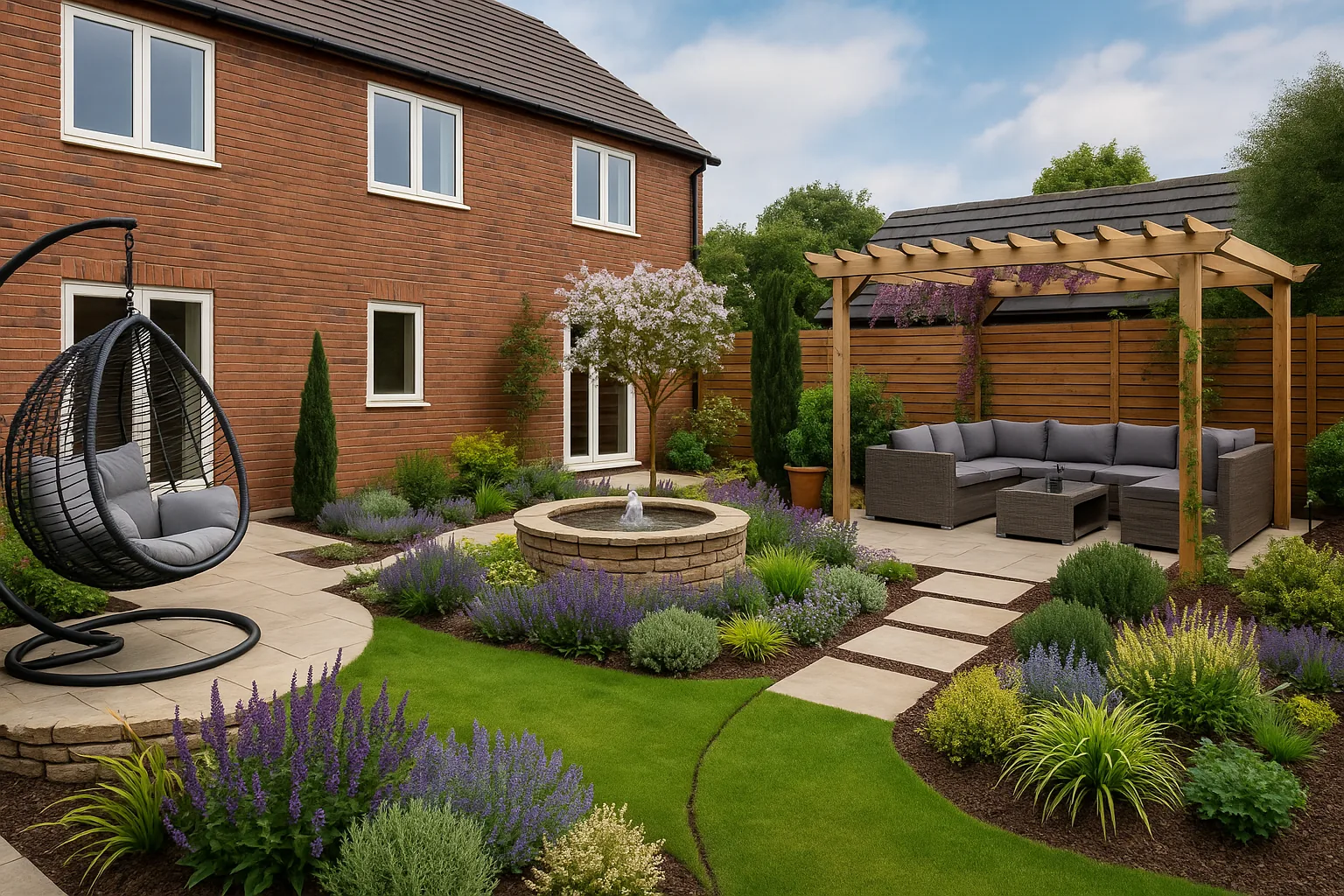
Living in a Leicester conservation area changes what you can do in your garden — here's what's restricted, what's allowed, and how we handle the paperwork.
What a conservation area is
A conservation area is an area of 'special architectural or historic interest' designated under the Planning (Listed Buildings and Conservation Areas) Act 1990. Inside one, the local council has additional control over external changes to protect the character that made it special. Leicester has around 30 designated conservation areas across the city and surrounding districts; we work in several of them regularly.
The Leicester conservation areas we work in most often
Stoneygate covers the prestigious Victorian and Edwardian streets between London Road and Knighton — Stoneygate Road, Victoria Road East, Elms Road and surrounding. Clarendon Park covers the dense Edwardian terrace streets around Queens Road. Oadby Village conservation area covers the historic core around Church Road and the High Street. Kirby Muxloe Village conservation area covers Main Street, the area around Kirby Muxloe Castle, and Station Road. Knighton, parts of Loughborough, and the historic cores of several Charnwood and Hinckley & Bosworth villages also have designations — including Anstey village (centred on the High Street and Park Road) and Markfield village (centred on Main Street and the older farmstead streets).
How permitted development changes inside a conservation area
Inside a conservation area, several permitted development rights are restricted or removed entirely. The most relevant for landscaping: (1) cladding the exterior of a house is removed; (2) outbuildings to the side of a house lose their permitted development rights; (3) any hard surface (including driveways) in front of the principal elevation needs planning permission regardless of size or permeability; (4) some councils have Article 4 directions that remove additional rights — Stoneygate has one of the most extensive.
Front gardens — the biggest restriction
The single biggest practical impact for homeowners is on front gardens. Even a small permeable driveway extension in a conservation area generally needs planning permission. Boundary walls, gates and railings facing the street are also closely controlled. We've successfully secured permissions for several front-garden landscaping projects in conservation areas, but the process adds 8–12 weeks to the project timeline.
Trees in conservation areas — the 6-week notice
If you want to cut down, top or lop any tree in a conservation area with a stem diameter greater than 75 mm at 1.5 m above ground level, you must give the council 6 weeks' notice. They can respond by placing a Tree Preservation Order on the tree. We always survey trees as part of our site visits in conservation areas and flag any that would need notice.
Materials that work — and ones to avoid
Conservation officers want new landscaping to complement the existing character — that usually means natural materials. Natural stone (Indian sandstone, York stone, granite setts) is almost always preferred over concrete imitations. Composite decking and bright synthetic-looking surfaces are usually a hard no. Traditional clay brick edging, hand-iron gates, and box-hedge borders all sit well in conservation-area applications.
Lighting in conservation areas
External lighting needs to be sympathetic — low-level bollard lights, recessed step lights, and warm white (2700K) LED uplighters on planting all generally pass. High-output security floodlights and cool-white (5000K+) commercial-style lighting rarely do. We design conservation-area lighting schemes to BS 5489 standards using warm-tone fittings.
Listed properties inside conservation areas
Around 12,000 buildings in Leicestershire are listed. If your home is both listed AND in a conservation area, you'll need both Listed Building Consent AND planning permission for visible external changes — including landscaping that affects the building's setting. We handle the applications as part of the quoted project.
What we include in every conservation-area quote
Our free instant quote tool flags conservation-area addresses automatically. The detailed quote then includes: a conservation-area check; a permitted-development assessment; a recommended planning route (if any); a materials specification using period-sympathetic materials; and (if a planning application is needed) a recommended planning consultant and a realistic timeline.
Frequently Asked Questions
Is my property in a Leicester conservation area?
Use the Leicester City Council planning portal (or your district council's site for outside the city — Charnwood, Blaby, Oadby & Wigston, Hinckley & Bosworth) to search your address. We also check this automatically when you request a quote.
Can I lay a patio in my back garden if I'm in a conservation area?
Yes — back gardens in conservation areas usually still allow ground-level patios under permitted development. It's mainly front gardens, side extensions and visible boundary changes that need consent.
How long does a conservation-area planning application take?
Typically 8 weeks for a straightforward application, longer if the planning officer requests amendments. We build this into project timelines and start the planning process at the same time as finalising the design.
Related Reading & Service Pages
Read next: Permitted Development for Gardens
Relevant service: Visit our full garden makeover service →
See real installs: Browse our project case studies →
Areas covered in this article:
Get your free instant quote & AI garden design
Itemised pricing plus a free AI design preview — delivered in under 90 seconds. No charge, no obligation, no sales call.
Get My Free Quote & Design