
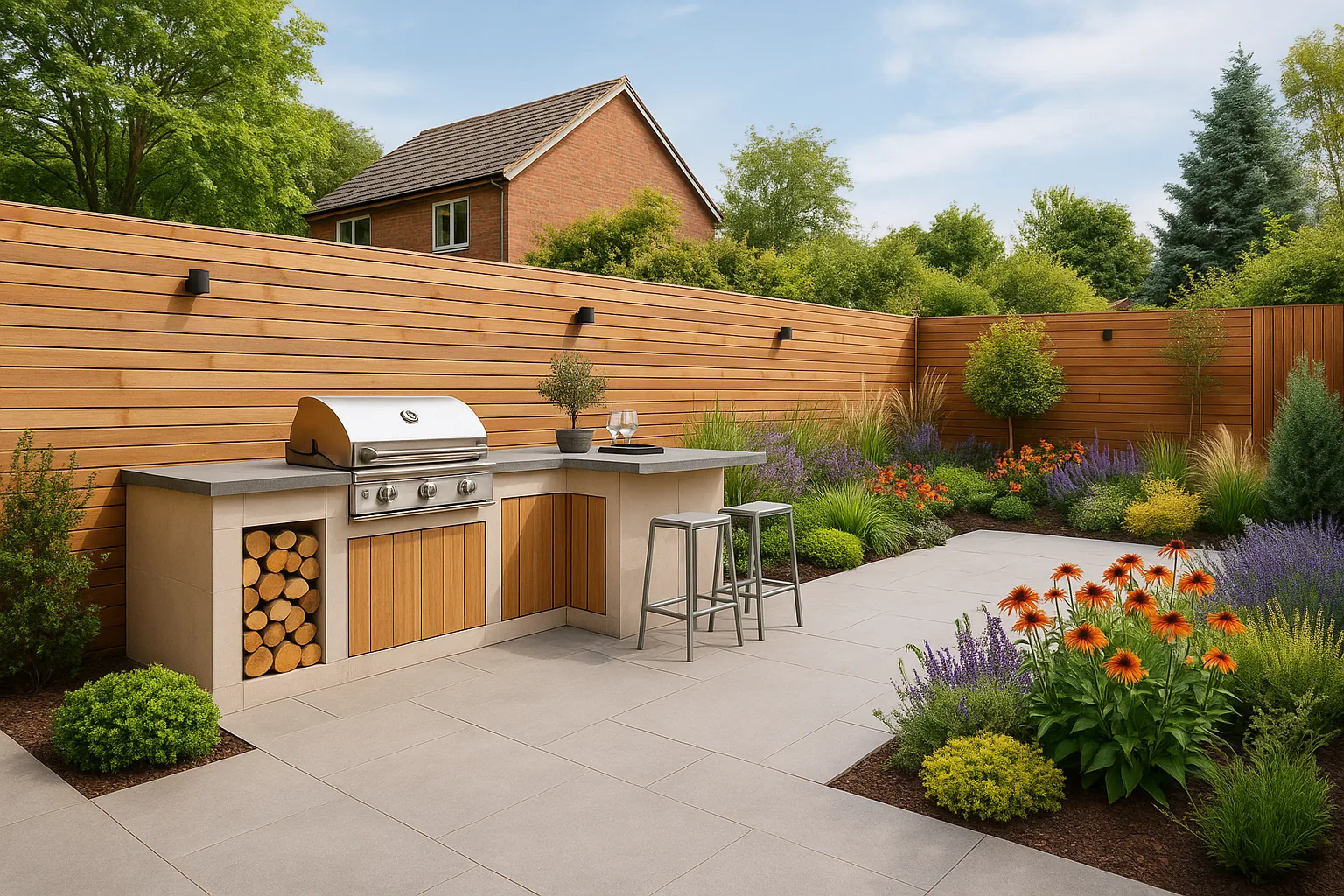
The UK's unpredictable weather demands patio materials that can withstand rain, frost, and temperature fluctuations. This guide compares the most popular options to help you choose the best material for your outdoor space.
Porcelain Paving
Pros:
- Exceptionally durable and frost-resistant
- Low water absorption (under 0.5%)
- Minimal maintenance required
- Wide range of styles mimicking natural stone and wood
- Resistant to stains, algae, and moss
Cons:
- Higher upfront cost
- Can be slippery when wet (choose textured finishes)
Natural Stone
Pros:
- Timeless, authentic appearance
- Each piece is unique
- Adds significant property value
- Excellent grip underfoot
Cons:
- Requires regular sealing
- More porous than porcelain
- Can develop moss in shaded UK gardens
- Higher maintenance
Block Paving
Pros:
- Cost-effective option
- Easy to replace individual blocks if damaged
- Wide variety of patterns and colors
- Good drainage when properly laid
Cons:
- Weeds can grow between blocks
- Needs regular joint sand topping
- Can shift over time without proper base
Best Material for UK Weather?
Porcelain paving is our top recommendation for UK gardens. Its low water absorption makes it highly resistant to frost damage and cracking during winter freeze-thaw cycles. While the upfront cost is higher, the minimal maintenance and 50+ year lifespan make it the most cost-effective long-term choice.
Price Comparison (2025 UK Prices)
Material Costs (Supply + Professional Installation for 20m² Patio):
- Porcelain Paving: £72-£132/m² = £1,440-£2,640 total
- Natural Stone (Sandstone/Limestone): £60-£108/m² = £1,200-£2,160 total
- Natural Stone (Granite/Slate): £84-£144/m² = £1,680-£2,880 total
- Block Paving: £48-£84/m² = £960-£1,680 total
- Concrete Slabs: £36-£60/m² = £720-£1,200 total
- Resin-Bound: £60-£96/m² = £1,200-£1,920 total
Top UK Patio Material Brands
- Porcelain - Marshalls Symphony: Premium range, £72-£96/m², 25-year guarantee
- Porcelain - Brett Landscaping: Mid-range, £60-£84/m², realistic wood/stone effects
- Natural Stone - Bradstone: Wide range, £54-£90/m², trusted UK brand
- Natural Stone - Stonemarket: Premium Indian sandstone, £60-£108/m²
- Block Paving - Tobermore: High quality, £42-£66/m², excellent color retention
Installation Considerations
Professional Installation Breakdown:
- 1. Excavation: 150-200mm depth removal (£18-£24/m²)
- 2. Sub-base: MOT Type 1 aggregate, compacted (£12-£18/m²)
- 3. Mortar bed: Sharp sand/cement mix (£6-£9/m²)
- 4. Laying: Skilled labour (£24-£36/m²)
- 5. Pointing: Jointing compound (£6-£12/m²)
- Total Installation Cost: £66-£99/m² (excluding materials)
Timeline: 3-5 days for typical 20m² patio (weather dependent)
Maintenance Requirements & Annual Costs
Low Maintenance (Porcelain)
- • Sweep debris monthly
- • Pressure wash annually: £0 (DIY) or £120 (pro)
- • No sealing required
- Annual cost: £0-£120
Higher Maintenance (Natural Stone)
- • Sweep + clean monthly
- • Seal every 2-3 years: £240-£480
- • Moss treatment: £60-£120/year
- • Repoint joints: £180-£360 (every 5-7 years)
- Annual cost: £180-£360
Slab Sizes & Thickness Guide
Choosing the right slab size affects both aesthetics and installation cost:
- 600mm x 600mm: Most common, easy to lay, modern look
- 900mm x 600mm: Popular rectangular format, elongates space
- 1200mm x 600mm: Premium large format, fewer joints, contemporary
- Mixed sizes: Random patterns (opus romano), traditional aesthetic
- Thickness: 20mm standard for patios, 30mm for driveways
Slip Resistance Ratings
UK Building Regulations recommend R11 rating for external paving:
- R9: Minimal slip resistance (avoid for outdoor use)
- R10: Moderate (acceptable for covered patios)
- R11: Good (recommended for UK patios)
- R12/R13: Excellent (pool surrounds, wet areas)
Textured and riven finishes offer better grip than polished surfaces
Lifespan Comparison
- Porcelain: 50+ years (virtually indestructible)
- Natural Stone: 30-50 years with proper sealing
- Block Paving: 20-25 years (can settle over time)
- Concrete Slabs: 20-30 years (may crack/fade)
- Resin-Bound: 15-20 years (UV can cause discoloration)
What About Resin-Bound Surfaces?
Resin-bound surfacing is gaining popularity in the UK. It's permeable (great for drainage), low-maintenance, and frost-resistant. However, it's best suited for driveways and paths rather than patio seating areas.
Planning Permission & Building Regulations
Most patio projects don't require planning permission, but you must:
- • Use permeable materials OR connect drainage to soakaway if >5m² non-permeable
- • Avoid raising ground level more than 300mm without permission
- • Check with local authority if property is listed or in conservation area
Patio Materials and Long-Term Maintenance Costs
The upfront price of patio slabs is only part of the story. What you spend maintaining a patio over 10–20 years varies dramatically by material. Porcelain — the most popular choice for Leicester gardens right now — requires almost no maintenance. An occasional pressure wash keeps it looking new. Natural sandstone needs annual sealing to prevent staining and protect against frost damage. Block paving needs periodic re-pointing as jointing compound weathers away.
Indian sandstone, despite its beauty, is particularly susceptible to the freeze-thaw cycle that UK winters deliver. Water penetrates unsealed stone, freezes, expands and gradually damages the surface. In Leicester's climate — with regular overnight frosts from November through March — unsealed sandstone can show significant surface degradation within 5–7 years.
Porcelain's durability advantage becomes financially significant over time. A £95/m² porcelain patio that needs no maintenance over 25 years is substantially cheaper in total cost of ownership than a £55/m² sandstone patio requiring sealing every two years at £150–£250 per treatment.
How the UK Climate Affects Your Material Choice
The key properties to look for in a patio material for Leicester's climate are: low water absorption (prevents frost damage), high slip resistance when wet (essential for safety), UV stability (prevents fading), and resistance to moss and algae — a constant challenge in shaded Leicester gardens.
Porcelain scores well on all four criteria. Its extremely low water absorption — typically below 0.5% — makes it frost-proof in all UK conditions. Textured finishes provide good slip resistance, and being non-porous means moss and algae struggle to gain a foothold. Indian sandstone has higher water absorption and will develop algae in shaded areas, requiring more frequent cleaning and retreatment.
If you have a predominantly shaded garden — north-facing, overshadowed by trees or a neighbouring property — this is the strongest argument for choosing porcelain over natural stone. In a sunny, sheltered garden, the maintenance requirements of natural stone are much more manageable.
Matching Your Patio to Your Home's Architecture
The best patios feel like a natural extension of the house. Material selection should start with the exterior of your home — the colour of the brickwork, the style of windows, the tone of render or cladding. A warm red-brick house usually suits natural sandstone or buff-toned porcelain better than stark cool-grey slabs. A rendered or contemporary property typically looks best with clean grey, white or slate porcelain.
The patio level matters too. Where possible, a patio should flow from the main door at or slightly below floor level — this connection to the interior makes the outdoor space feel like a room rather than a feature. Step changes between house and patio create a visual and physical barrier that reduces how often people actually use the outdoor space.
If you are unsure which material and colour will work for your specific Leicester property, our free AI garden design tool generates a photorealistic preview using an actual photo of your garden — showing you how different patio options will look before any decision is made.
Frequently Asked Questions
What is the cheapest patio material in the UK?
Concrete paving slabs are typically the cheapest patio material, starting from around £20–£30 per m² for the materials alone. However, they tend to look dated quickly and don't add the same property value as porcelain or natural stone. Indian sandstone is the next step up at £35–£55 per m² and offers much better aesthetics for a modest premium.
How long does a porcelain patio last?
A porcelain patio, professionally installed with a proper compacted sub-base and appropriate mortar, should last 25–30 years with minimal maintenance. Porcelain's non-porous surface resists frost, staining and algae — it will still look excellent after two decades with nothing more than an annual pressure wash.
What size patio slabs look best?
Larger slabs — 600x600mm or 600x900mm — generally look better on most Leicester garden patios as they reduce the number of grout lines visible and create a more seamless, spacious appearance. Smaller slab sizes can work well in smaller spaces or period properties where a more traditional aesthetic is appropriate.
Get a Quote for Your Patio Project
Tell us your preferred material and patio size, and receive an instant estimate.
Get Instant Quote & Design