
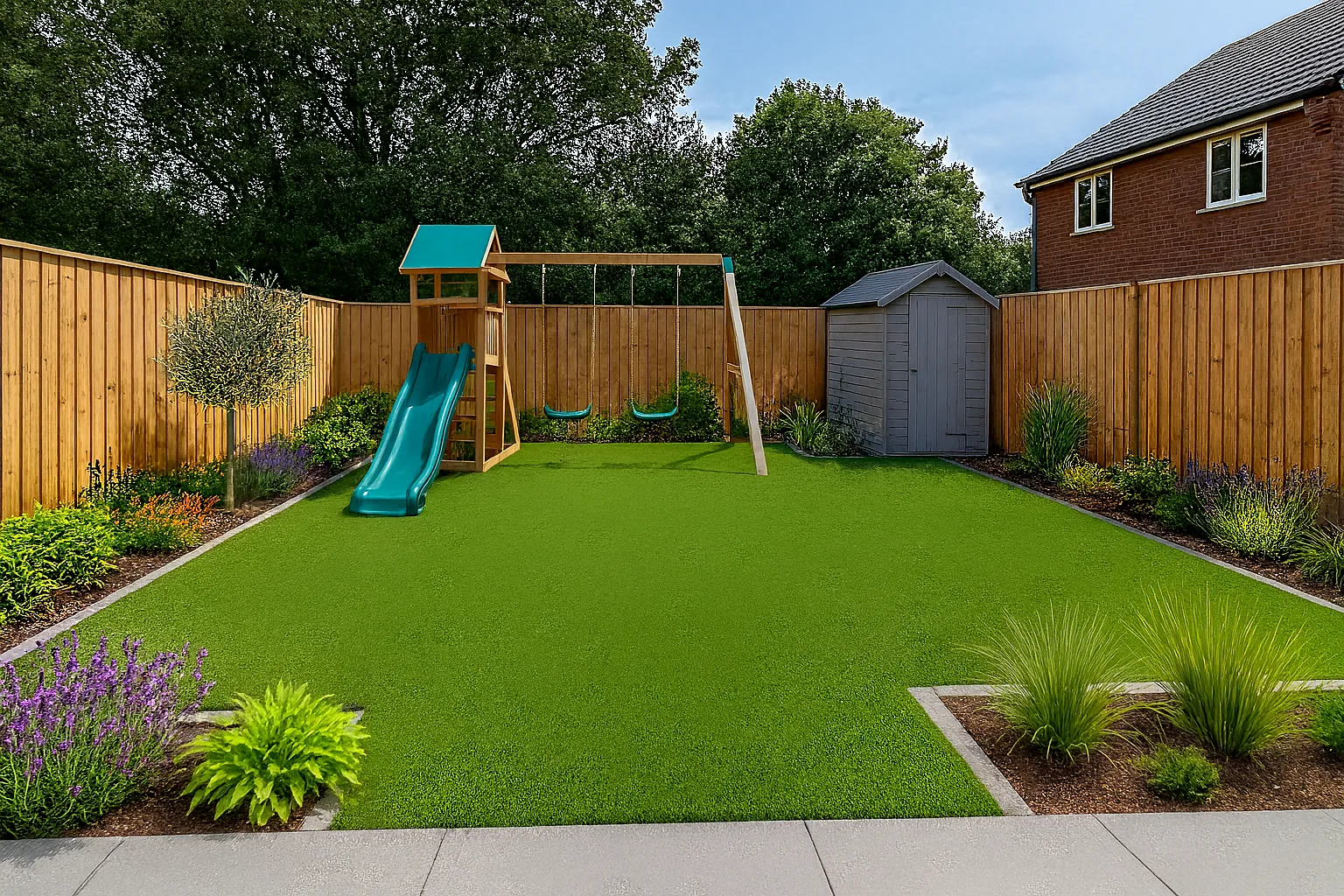
Choosing between artificial grass and natural turf? This comprehensive guide compares costs, maintenance, durability, and aesthetics to help you make the right decision for your UK garden.
Initial Cost Comparison
Natural Turf
£10-£18 per m²
Including preparation and installation
Artificial Grass
£48-£96 per m²
Including sub-base and installation
Maintenance Requirements
Natural Turf
- Weekly mowing (spring-autumn)
- Regular watering
- Seasonal feeding & treatment
- Weed control
- Annual scarifying
Artificial Grass
- Occasional brushing
- Periodic rinsing
- Remove debris
- No mowing, watering, or feeding
Long-Term Cost Analysis
Over a 10-year period, natural turf maintenance costs (mowing, treatments, water) typically total £1,800-£3,600. Artificial grass requires minimal maintenance, making it more cost-effective long-term despite higher upfront costs.
Aesthetics & Feel
Modern artificial grass looks remarkably realistic, but natural turf still offers unmatched authenticity. Natural grass feels softer underfoot and has that distinctive fresh-cut aroma. However, artificial grass stays green year-round, even during dry UK summers or wet winters.
Durability & Lifespan
- Natural Turf: Can last indefinitely with proper care, but needs regular renovation
- Artificial Grass: 10-15 year lifespan before replacement needed
Best for UK Climate?
Natural turf thrives in the UK's temperate climate but struggles during droughts or heavy rain. Artificial grass performs consistently regardless of weather, making it ideal for high-traffic areas, shaded gardens, or families with children and pets.
Artificial Grass Specifications Explained
- Pile Height: 25-35mm ideal for UK gardens (realistic look, comfortable feel)
- Density: 16,000-18,000 stitches/m² for quality (denser = more realistic)
- Material: Polyethylene (soft) or Polypropylene (durable, cheaper)
- Backing: Dual-layer latex for stability and drainage
- Drainage: Minimum 30 litres/m²/minute (UK rainfall requirement)
- UV Resistance: Minimum 8,000 hours (prevents fading in sun)
Top UK Artificial Grass Brands (2025)
- Namgrass: Premium brand, £60-£96/m², 10-year warranty, excellent realism
- LazyLawn: Mid-range, £48-£72/m², 8-year warranty, good value
- Easigrass: High-end, £72-£108/m², 12-year warranty, ultra-realistic
- Marshalls: Budget-friendly, £36-£54/m², 5-year warranty, decent quality
Prices include supply only. Add £18-£30/m² for professional installation.
Installation Process (Professional vs DIY)
Professional Installation (Recommended)
- 1. Excavate 75-100mm depth
- 2. Install weed membrane
- 3. Lay granite sub-base (compacted)
- 4. Add sharp sand leveling layer
- 5. Fit and secure artificial grass
- 6. Infill with silica sand
- Time: 2-3 days for typical garden
DIY Installation
- Difficulty: Moderate
- Savings: £360-£720 (40m² garden)
- Time: 2-3 weekends
- Risk: Poor drainage if done incorrectly
- Tools needed: Compactor, Stanley knife, joining tape
- Professional recommended for drainage issues
Pet-Friendly Artificial Grass
If you have dogs, choose artificial grass with these features:
- Enhanced drainage: 60+ litres/m²/minute (for urine runoff)
- Antimicrobial backing: Prevents odor buildup
- Durable yarn: Polypropylene blend resists wear from claws
- Infill choice: Zeolite infill absorbs odors (not silica sand)
- Maintenance: Hose down weekly, enzyme cleaner monthly
Common Problems & Solutions
- Flattened pile: Brush with stiff broom monthly to restore bounce
- Poor drainage: Install additional drainage holes in sub-base
- Fading: Choose UV-resistant grass (8,000+ hours rating)
- Weed growth: Ensure proper weed membrane installation
- Joins visible: Professional installation avoids this issue
- Heat retention: Hosing down cools surface on hot days
Warranty & Guarantees
Quality artificial grass comes with comprehensive warranties:
- • UV Fade Protection: 8-12 years depending on brand
- • Manufacturing Defects: 5-10 years
- • Professional Installation Guarantee: Typically 2 years
- • What's NOT covered: Improper maintenance, pet damage, fire
Environmental Considerations
Natural turf is biodegradable, supports wildlife, and absorbs carbon. Artificial grass is made from plastic but saves water and eliminates pesticide/fertilizer use. Both have environmental trade-offs.
Environmental Impact Comparison:
- Water saved: 200-400 litres/week during summer (artificial grass)
- CO₂ from lawnmower: Eliminated with artificial grass
- Recyclability: Some brands now offer recycling programs
- Lifespan disposal: Artificial grass goes to landfill after 15 years
A 10-Year Cost Comparison: Who Really Wins?
Natural turf sounds cheaper upfront — a typical Leicester lawn might cost £800–£1,500 to lay from scratch with quality rolls and proper topsoil preparation. But the ongoing costs add up: mowing, annual fertilising, scarifying, aerating, top-dressing bare patches and re-seeding. Time-valued at a modest £15 per hour, these activities easily reach £300–£500 per year across a full season.
Artificial grass costs more upfront — £2,500–£5,000 for a typical garden — but the ongoing maintenance costs are minimal. An occasional brush-down and rinse is all that's required. Over 10 years, the total cost of ownership is often comparable, and the artificial lawn still looks immaculate while a natural lawn that has survived 10 UK winters rarely does. For gardens with heavy use — children, dogs, shaded areas — the comparison is even more favourable for artificial grass.
The honest calculation for most Leicester homeowners: if you value your weekends, dislike muddy paws, or have a garden that consistently struggles to grow grass well, artificial grass wins on cost of ownership as well as convenience.
Pet and Child Safety: Which Surface Is Safer?
Both surfaces are generally safe for children and pets, but each has specific considerations. Natural turf can harbour insects and associated pathogens — though this is rarely significant for healthy children and animals. It becomes muddy in wet conditions, meaning paw prints and dirty knees are a constant reality through a Leicester winter.
Artificial grass is non-toxic and lead-free (verify this when purchasing — reputable brands always publish their safety certifications). It stays clean and drains quickly after rain, significantly reducing the mud problem. The concern sometimes raised about warmth in direct sun is manageable: a quick spray with a garden hose cools it within minutes, and most dogs seek shade in hot weather regardless.
For children's play areas, artificial grass pairs well with impact-absorbing rubber underlays that meet British playground safety standards — something natural turf cannot replicate for climbing frame zones without a specialist surface installation.
Installation Quality: The Factor That Matters Most
Whether you choose artificial or natural turf, the quality of installation is the biggest determinant of how good it looks and how long it lasts. For artificial grass, the three critical factors are: the quality of the sub-base (must be compacted aggregate, not just sand), the quality of the weed membrane (commercial grade, not the lightweight garden centre type), and the quality of the grass itself (UV-stabilised, with a realistic thatch layer).
For natural turf, soil preparation is everything. Leicester's clay soil compacts easily and drains poorly — if you lay turf straight onto compacted clay you will have a waterlogged, yellowing lawn within a year. Always incorporate sharp sand and organic matter before laying, and ensure the ground is properly levelled to prevent pooling.
For either option, request a quote that clearly specifies the preparation depth, materials used and warranty offered. A competitive quote that skimps on preparation is a false economy every single time.
Frequently Asked Questions
How long does artificial grass last in the UK?
High-quality artificial grass, professionally installed with a proper sub-base and weed membrane, typically lasts 15–20 years in the UK climate. Most premium brands come with a 10-year manufacturer's warranty on colour fastness and pile resilience.
Is artificial grass too hot in summer?
Artificial grass does get warmer than natural turf in direct summer sun — surface temperatures can reach 40–50°C on very hot days. However, a 30-second spray with a garden hose drops the temperature to comfortable levels within minutes. In Leicester's climate, days hot enough to cause genuine discomfort are relatively infrequent.
How much does artificial grass cost installed in Leicester?
Professionally installed artificial grass in Leicester costs between £60 and £120 per square metre including all preparation works, sub-base, membrane and grass. For a typical 40m² garden lawn area, expect to pay £2,500–£4,500 depending on grass quality and ground conditions.
Can artificial grass be installed over concrete?
Yes — artificial grass can be installed directly over existing concrete using appropriate adhesive and a suitable drainage system. The concrete surface needs to be in reasonable condition and have adequate drainage to prevent surface pooling. This approach avoids the cost of breaking out existing concrete.
Get an Instant Quote for Your Lawn Project
Whether you prefer natural turf or artificial grass, we can provide a detailed quote in minutes.
Get Instant Quote & Design